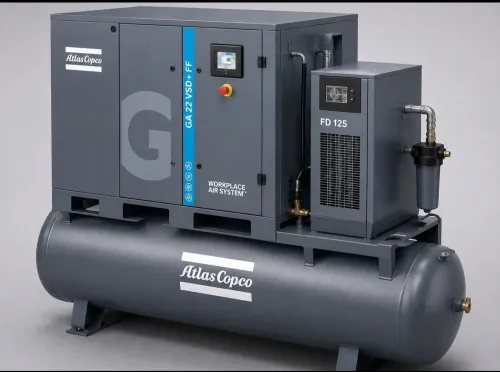

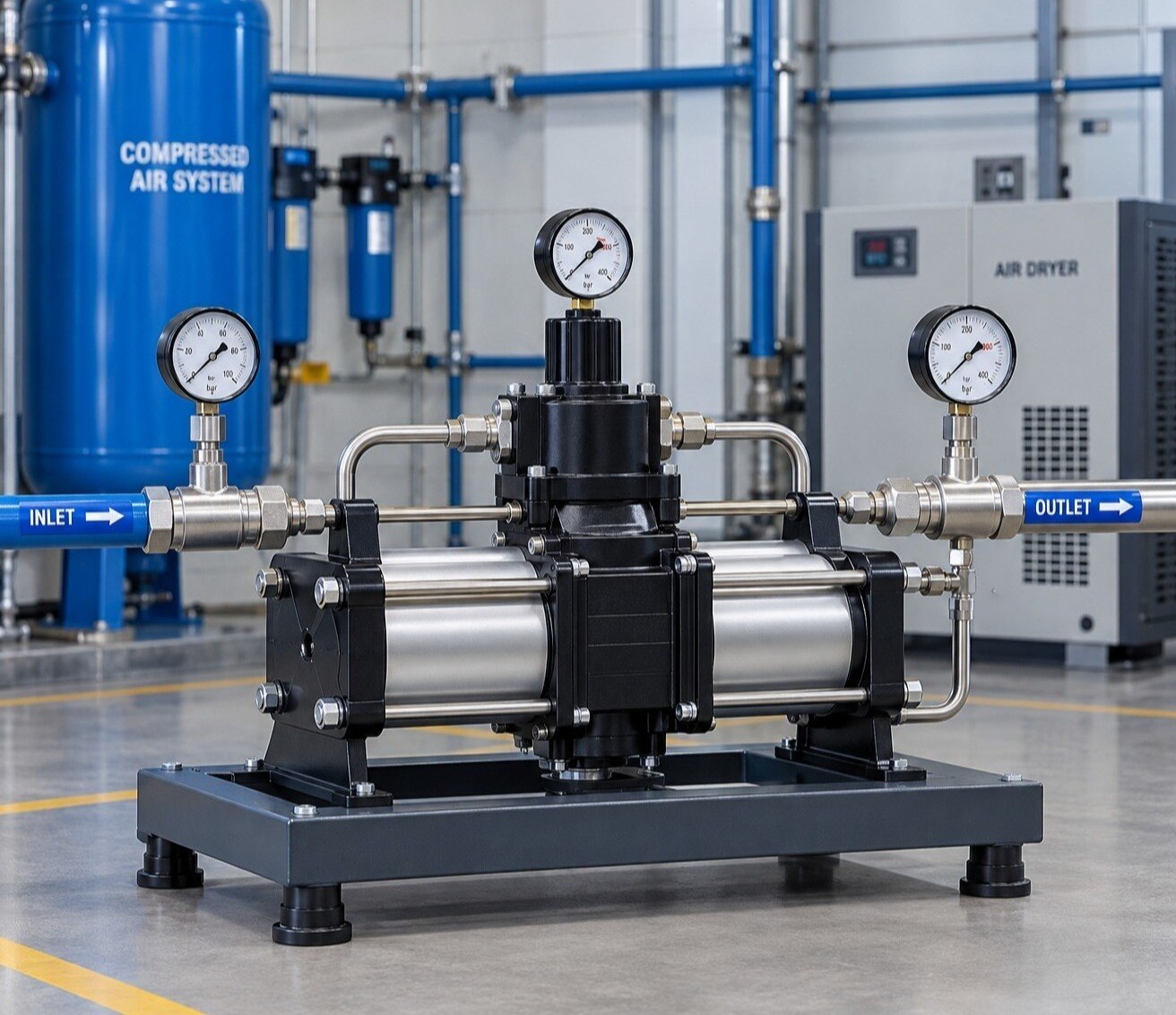
A booster does not deliver its advertised flow simply because the upstream rotary screw compressor has enough horsepower. You must reconcile actual inlet pressure, standardized flow, gas quality, pressure ratio, peak demand, and receiver capacity before selecting the booster and its controls.
Key takeaways
- Use pressure and flow at the booster inlet, not compressor nameplate values.
- Convert downstream demand to booster inlet flow before sizing equipment.
- Include packaging peaks, receiver recovery, and simultaneous machine demand.
- Verify gas path, lubrication, cooling, controls, and safety limits before approval.
Read the compressor and booster datasheets on the same pressure basis
A booster is suitable only if the rotary screw compressor can maintain the booster’s required suction pressure and mass flow at the inlet. Matching booster pumps with rotary screw air compressor specifications therefore starts with the pressure actually available after the receiver, dryer, filters, valves, hoses, and piping—not the compressor’s nameplate discharge pressure.
- Record the compressor’s rated discharge pressure and its capacity under ISO 1217 reference conditions.
- Calculate pressure loss through every component before the booster. Use the resulting pressure as the booster inlet pressure, with the expected inlet temperature.
- Put both flow figures on one basis. Convert free-air delivery (FAD), inlet actual volume, standard volume, or discharge actual volume to the same reference conditions before comparing them.
- Check the booster performance curve at that actual inlet pressure, inlet temperature, and required peak flow. A rating at a higher suction pressure does not prove equivalent capacity.
- Confirm that the compressor can sustain the booster’s suction demand during the complete duty cycle, not just during a short test.
Then compare the booster outlet pressure with the ratings of the high-pressure receiver and downstream circuit. The booster’s own pressure rating does not validate filters, dryers, valves, hoses, or packaging equipment.
Specify a control scheme that coordinates both machines. Pressure-band control, inlet-pressure protection, unloading or speed control, and restart sequencing prevent the booster from exhausting the base compressor or causing rapid load-and-unload cycling. For contamination-sensitive service, state the required ISO 8573-1 particle, water, and oil classes at the point of use.
Convert downstream demand into a comparable booster flow
Put every flow on one reference basis before rotary screw compressor booster pump selection. The safest basis is mass flow or standardized free-air flow at stated reference pressure and temperature. FAD is already a reference-condition figure, but record the standard used; ISO 1217 test data do not make every “standard” flow identical.
1. Treat FAD or standard volume as directly comparable only when pressure, temperature, humidity basis, and time unit match. Convert normal litres per minute or standard cubic metres per hour to mass flow if the reference conditions differ.
2. Convert inlet actual volume with this relationship: Qref = Qactual × Pactual ÷ Pref × Tref ÷ Tactual. Use absolute pressure in both pressure terms and absolute temperature in kelvins. A flow measured at the booster suction is not equivalent to the same numerical flow at atmospheric pressure.
3. Convert discharge actual volume using the discharge pressure and temperature. Aftercooling changes the volume, not the mass, so use the gas condition at the measurement point rather than assuming the booster outlet is at room temperature.
4. For machine consumption, separate peak flow from average flow. Use the manufacturer’s stated reference basis; if it gives litres per cycle, multiply by cycles per minute, then retain the cycle peak for receiver and booster checks.
For booster pump compressor sizing, use the required peak standardized flow at the booster outlet, then check the booster curve at actual suction pressure and temperature. Do not add nameplate flow ratings: the rotary screw compressor must cover plant demand, leakage, receiver recharge, and the booster’s peak while maintaining suction pressure.
Include cooler capacity at that flow and pressure ratio.
Size for packaging peaks, receiver recovery, and simultaneous machines
Use the simultaneous peak, not average consumption, to size booster pump requirements for packaging. The booster must deliver the required outlet pressure and standardized free-air or mass flow while the bottle, blow-moulding, actuator, filling, sealing, and blow-off events overlap.
1. Record each demand at its actual pressure and cycle duration. Convert bottle blowing and moulding demand to free-air flow at the stated reference conditions; calculate actuator, filling, sealing, and blow-off demand from cylinder volume, stroke frequency, valve flow, and open time.
2. Add overlapping demands during the worst changeover or production cycle. Do not add every machine’s maximum unless those events coincide, but include the largest credible simultaneous combination and specify its duty cycle.
3. Select a local receiver for the shortfall between instantaneous demand and booster delivery. It can supply a transient and reduce pressure fluctuation at the machine, but it cannot replace sustained capacity. Check that the booster restores receiver pressure before the next peak.
4. Check the booster curve at the actual inlet pressure and temperature. Use pressure available after the rotary screw compressor, dryer, filters, receiver, valves, and piping—not the compressor nameplate pressure. Confirm that the compressor maintains this inlet pressure while supplying the booster’s mass flow.
The booster outlet rating must cover the receiver, filters, hoses, valves, and packaging equipment as a complete high-pressure circuit. For large pressure ratios, verify discharge temperature, maximum outlet pressure, and whether two stages are required; no universal ratio makes every booster single-stage.
Choose the gas path, lubrication arrangement, and cooling method
Specify an oil-free booster when oil carryover can contaminate the gas, product, or downstream catalyst. Define the required point-of-use quality with ISO 8573-1 classes for particles, water, and oil; “clean air” is not a specification. Use an oil-injected booster only when oil separation, filtration, and maintenance can meet the allowed oil limit.
| Gas or service | Preferred arrangement | What to verify |
|---|---|---|
| Compressed air | Oil-free for product, instrument, or high-purity service; oil-injected for non-contact utility air | ISO 8573-1 class after the booster, filter loading, condensate removal, and receiver hygiene |
| Nitrogen | Oil-free gas path when purity or product contact matters | Seal compatibility, oxygen exclusion, leak tightness, required nitrogen purity, and whether the booster materials introduce contamination |
| Carbon dioxide | Dedicated gas-compatible seals and materials | Elastomer compatibility, corrosion, discharge temperature, phase change, and dry-ice formation during expansion |
| Product-contact gas | Oil-free, cleanable path with process-approved seals and wetted materials | Material certificates, extractables or odour limits, clean-in-place requirements, and the final gas specification |
Choose seals for the actual gas, pressure, temperature, and duty cycle, not for air by default. A seal that survives compressed air can swell, harden, or leak in nitrogen or carbon dioxide service.
Add an aftercooler when discharge temperature exceeds the receiver, piping, seal, or product limit; size it for peak mass flow and provide a separator and drain. Airprax Pneumatics LLP can help reconcile these gas-path details with the rotary screw compressor booster pump selection and the booster’s inlet conditions.
Related products
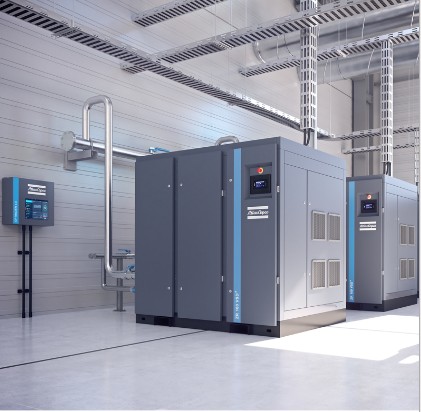 | Air Compressor Airprax Pneumatics LLP, Bangalore, offers high-performance Rotary Screw Air Compressors designed to provide a reliable, continuous, and efficient... View product → |
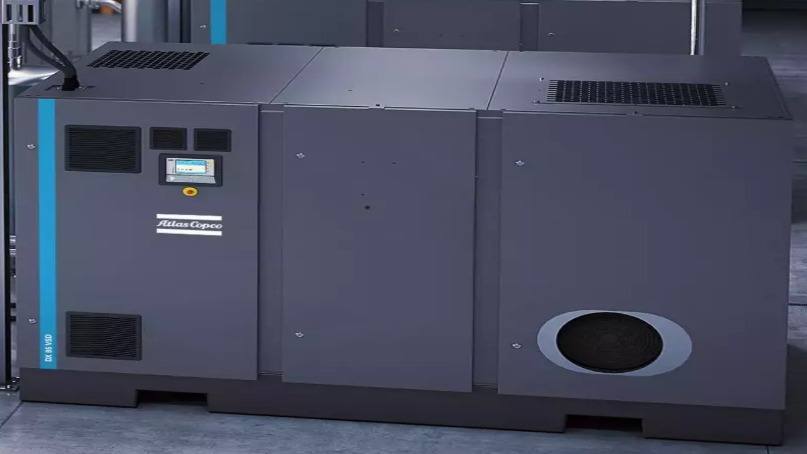 | Air Compressor Airprax Pneumatics LLP, Bangalore, offers oil-free air and gas boosters designed to efficiently increase the pressure of compressed air and gases for... View product → |
Confirm the system can run safely before approving the booster
Approve a booster only when the rotary screw compressor can sustain its inlet conditions while the plant serves every other user. If inlet pressure collapses during a packaging peak, specify a second-stage compressor or increase the base capacity; a booster cannot create missing flow.
1. Compare booster pumps with rotary screw air compressor specifications at the actual operating point. Confirm the compressor’s pressure after the receiver, dryer, filters, valves, and piping stays within the booster’s rated inlet range. Check the booster outlet rating against the receiver, hoses, fittings, valves, and packaging machine—not the booster alone.
2. Complete the booster pump compressor sizing check with peak mass flow or standardized free-air flow at the booster outlet. Put compressor and booster figures on the same reference basis under ISO 1217; a nominal rating at another suction pressure is not an equivalent capacity point.
Check the performance curve at actual inlet pressure and temperature.
3. Verify the control sequence for both machines. Pressure-band control, inlet-pressure protection, unloading or variable-speed control, and restart delays must stop the booster from demanding more air than the base compressor supplies. A receiver sized for recovery helps prevent rapid load/unload cycling.
4. Subtract plant demand, leakage, and receiver recharge from available compressor capacity, then test simultaneous machine operation. Hold pressure through the longest production cycle, not just a brief no-load trial.
5. Record the point-of-use air requirement under ISO 8573-1 for particles, water, and oil. Reject the arrangement if lubrication, condensate, overheating, relief-valve settings, or emergency isolation could breach the process limit or damage downstream equipment.
Frequently asked questions
Which compressor pressure should you use when selecting a booster pump?
Use the pressure available at the booster inlet after the receiver, dryer, filters, valves, hoses, and piping. Do not size from the rotary screw compressor’s nameplate discharge pressure alone.
How do you compare booster flow with rotary screw compressor capacity?
Convert downstream demand into a comparable booster inlet flow, using the same pressure basis and flow reference for both datasheets. Then confirm the compressor maintains that inlet mass flow.
What demand should booster pump compressor sizing include?
Include packaging peaks, receiver recovery, and every machine that can operate at the same time. A steady average demand is not enough when the booster must refill a receiver or serve intermittent packaging equipment.
What must you check before approving a rotary screw compressor booster pump?
Confirm the gas path, lubrication arrangement, cooling method, inlet pressure, flow, pressure limits, controls, and safe operating conditions match the complete installation.
Related product
 | Air Compresor ₹235000 Atlas Copco Make Silent Screw Air Compressor for small and medium size industries View product → |