
A failed or underperforming blower can stop aeration, conveying, drying, cooling, or combustion even when the motor still runs. You will be able to separate a blower fault from a plant-distribution problem, specify the right replacement, verify air cleanliness, and define a recovery service that restores production safely.
Key takeaways
- Size the blower for required airflow, discharge pressure, altitude, and temperature.
- Check inlet filters, valves, belts, piping, and leaks before replacing the blower.
- Verify oil-free performance with service records, air-quality tests, and contamination controls.
- Restart safely by recording baseline pressure, flow, temperature, vibration, and power readings.
Choose a blower by process duty, not by the label
An oil-free air blower moves a large volume of air at low or moderate pressure without injecting lubricating oil into the air stream. Its air-end uses dry-running rotors, lobes, impellers, or other sealed arrangements; “oil-free” does not mean zero oil, because ambient hydrocarbons, dust, condensate, pipe scale, and wear particles can still enter the process.
| Machine | Air delivery | Right use |
|---|---|---|
| Oil-free compressor | Lower volume at much higher pressure | Instrument air, tools, controls, and processes requiring compressed air |
| Roots blower | Pulsed, positive-displacement flow | Wastewater aeration and pneumatic conveying |
| Regenerative or side-channel blower | Lower flow with moderate pressure or vacuum | Light conveying, suction, cooling, and packaging equipment |
| Centrifugal blower | High continuous flow with pressure linked to speed | Combustion air, aeration, and large ventilation duties |
| Oil-free process blower | Continuous flow at the specified blower pressure | Drying, cooling, aeration, conveying, or vacuum generation |
Choose a blower when the process needs air movement rather than compressed air storage. Common duties include wastewater aeration, powder conveying, furnace combustion air, product drying, vacuum lifting, and equipment cooling; an oil-free compressor is the wrong substitute when pressure is low but airflow is high.
For oil free air blower sales and service for production recovery in bangalore, measure inlet conditions, discharge pressure, flow, motor current, temperature, vibration, and pressure at the point of use before selecting a replacement.
A blocked inlet filter, fouled silencer, or restricted pipe can mimic a failed blower, while a replacement matched only by motor power can remain overloaded.
Match airflow, pressure, and site conditions before buying
Ask for a certified performance curve, not a catalogue capacity. For industrial air blower sales in Bangalore, confirm the flow and discharge pressure at the stated inlet temperature, pressure, humidity, and altitude.
Select the machine where those requirements intersect the system curve; free-air delivery alone cannot show whether it will hold pressure at the point of use.
| Figure | What to confirm | Why it matters |
|---|---|---|
| Flow | m³/h or CFM, with standard or actual inlet conditions | Unlike reference conditions produce misleading comparisons |
| Pressure | Discharge pressure in mbar or kPa, plus maximum continuous pressure and operating range | Excess pressure raises power use; insufficient pressure stops production |
| Power | Absorbed power across the operating range, not only motor nameplate power | A nominally matching motor can still overload |
| Sound | Sound level and the measurement distance or method | The same dB value is meaningless without its test basis |
| Limits | Surge, turndown, temperature, vibration, and duty-cycle limits | Operation outside the curve causes trips, overheating, or damage |
Correct catalogue flow for Bangalore’s roughly 900 m elevation, ambient temperature, humidity, and inlet restriction. Ask the supplier to state the corrected mass flow and motor-loading calculation.
Before approving a replacement, record:
- Inlet pressure and temperature
- Discharge pressure, flow, motor current, vibration, and temperature
- Pressure at the actual point of use
- Pressure drop across filters, silencers, coolers, check valves, and piping
- Available voltage, phase, frequency, starting method, and continuous duty requirement
A blocked filter or undersized pipe can mimic a failed blower. Reduce avoidable pressure drop before buying more capacity.
Find out whether the blower is undersized, restricted, or failing
A new blower will not cure a blocked distribution line, and a larger motor will not fix a damaged air end. Separate those causes by measuring the machine and the process at the same operating condition.
Record these readings before changing components:
- Inlet pressure, temperature, and filter differential pressure
- Discharge pressure and flow at the blower outlet
- Pressure and flow at the point of use
- Motor current on each phase
- Air-end and motor temperatures
- Vibration at the bearings and casing
- Relief-valve, check-valve, and control-sensor status
High discharge pressure with low point-of-use pressure indicates a restriction between the blower and the process. Inspect fouled inlet filters, silencers, closed or damaged valves, blocked check valves, undersized pipework, condensate, and dirty aftercoolers. A large pressure drop across one component identifies the restriction.
If the blower reaches its pressure limit while delivering less flow than the process requires, compare its actual duty with the system curve. A motor with the same kilowatt rating is not proof that a replacement is correctly sized.
High current, temperature, or vibration points toward a repairable fault such as worn bearings, seals, belts, couplings, sensors, or inlet components. Oil free blower repair in Bangalore should assess those parts before recommending a complete air-end replacement.
Replace the air end when rotors have contacted the casing, clearances are lost, overheating keeps returning, or corrosion makes piecemeal repair unreliable.
Treat oil-free air as a specification that needs verification
Do not accept “oil-free” on the blower nameplate as proof of clean process air. Ambient dust, water vapour, condensate, pipe scale, wear particles, and intake hydrocarbons can enter the system after the air end.
1. Write the cleanliness target against ISO 8573-1 for particles, water, and oil. Class 0 is a user- or equipment-specified oil-concentration limit, stricter than Class 1; it does not mean literally zero oil.
2. Trace the complete air path: inlet filter and silencer, blower air end, aftercooler, separator, condensate drains, receiver, filters, valves, and distribution pipe. Specify each filter grade, dryer or aftercooler duty, drain arrangement, and replacement interval separately from the blower’s oil-injection design.
3. Take a baseline sample at the point of use while production runs at its normal flow and pressure. Use a qualified laboratory or sampling method suited to the ISO 8573-1 parameters, and record temperature, pressure, flow, filter condition, and drain operation with the sample.
4. Compare the report with the written process limit, then repeat sampling after installation, filter replacement, major repair, or any contamination event. A clean sample at the blower discharge does not prove clean air at a distant machine.
A competent oil free air blower service in bangalore will inspect the air end, inlet filtration, silencers, check valves, relief valves, aftercooler, drains, and control sensors before declaring compliance. Keep the sample reports, equipment condition, corrective actions, and retest results with the commissioning record.
Build a production-recovery service around safe restart and measured results
Before approving a replacement, separate a failed blower from a restricted distribution system. Record inlet temperature and pressure, discharge pressure, delivered flow, motor current, air-end temperature, vibration, and pressure at the point of use.
A motor with the same kilowatt rating can still overload or miss the process flow if its performance curve does not match the system.
Require these recovery deliverables:
- Inspect the air-end, inlet filter, silencer, check valve, relief valve, aftercooler, condensate drain, sensors, coupling, belts, and motor bearings.
- Apply lockout/tagout before opening guards or removing the air-end, then confirm zero stored pressure.
- Repair bearings, seals, couplings, belts, filters, sensors, valves, or motor bearings when clearances and housing condition remain acceptable.
- Replace the complete air-end when rotors have contacted the case, clearances are lost, overheating keeps recurring, or corrosion makes a partial repair unreliable.
- Supply a standby blower only after checking minimum safe flow, electrical protection, duct transitions, flexible connectors, noise control, condensate handling, and controls.
- Document the fault, before-and-after readings, parts fitted, oil-contamination test results, alarm settings, and restart approval.
Oil-free air blower service in Bangalore is incomplete if it ends with a running motor but no point-of-use measurement. Oil-free blower repair in Bangalore must also identify why the failure occurred, or the repaired machine will return to the same restriction.
For oil-free air blower sales and service for production recovery in Bangalore, Airprax Pneumatics LLP can use the recorded duty and system readings to compare repair, standby, and replacement options rather than selling by nameplate alone.
Related product
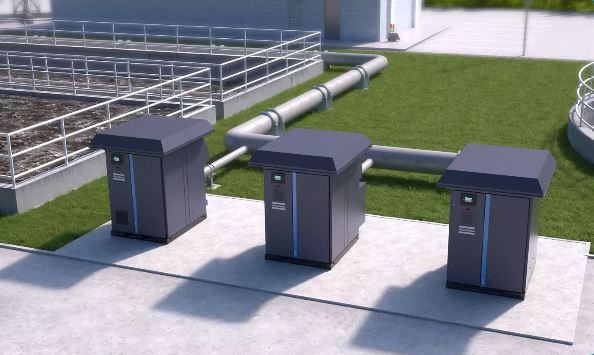 | Air Compressor Airprax Pneumatics LLP, Bangalore, offers reliable oil free air blowers designed to deliver clean, oil-free airflow for a wide range of industrial... View product → |
Frequently asked questions
How do you choose an oil-free air blower for a production process?
Choose by process duty: define required airflow, discharge pressure, operating hours, air-quality limits, turndown, noise, and installation conditions before comparing blower types.
What must you match before buying an industrial air blower?
Match the blower to required flow and pressure at the actual site altitude, inlet temperature, ambient conditions, pipe layout, voltage, and available cooling.
How can you tell whether a blower is undersized, restricted, or failing?
Compare current readings with commissioning data, then inspect inlet filters, silencers, valves, check valves, belts, piping, leaks, temperature, vibration, and motor power.
How do you verify that compressed air is oil-free?
Treat oil-free as a defined air-quality requirement. Check the blower design, maintenance records, intake conditions, downstream contamination risks, and test results against the specified cleanliness class.
What should an oil-free blower service include after a production stoppage?
A safe restart includes isolation checks, inspection, controlled start-up, leak and flow checks, vibration and temperature readings, and documented results against the baseline.