
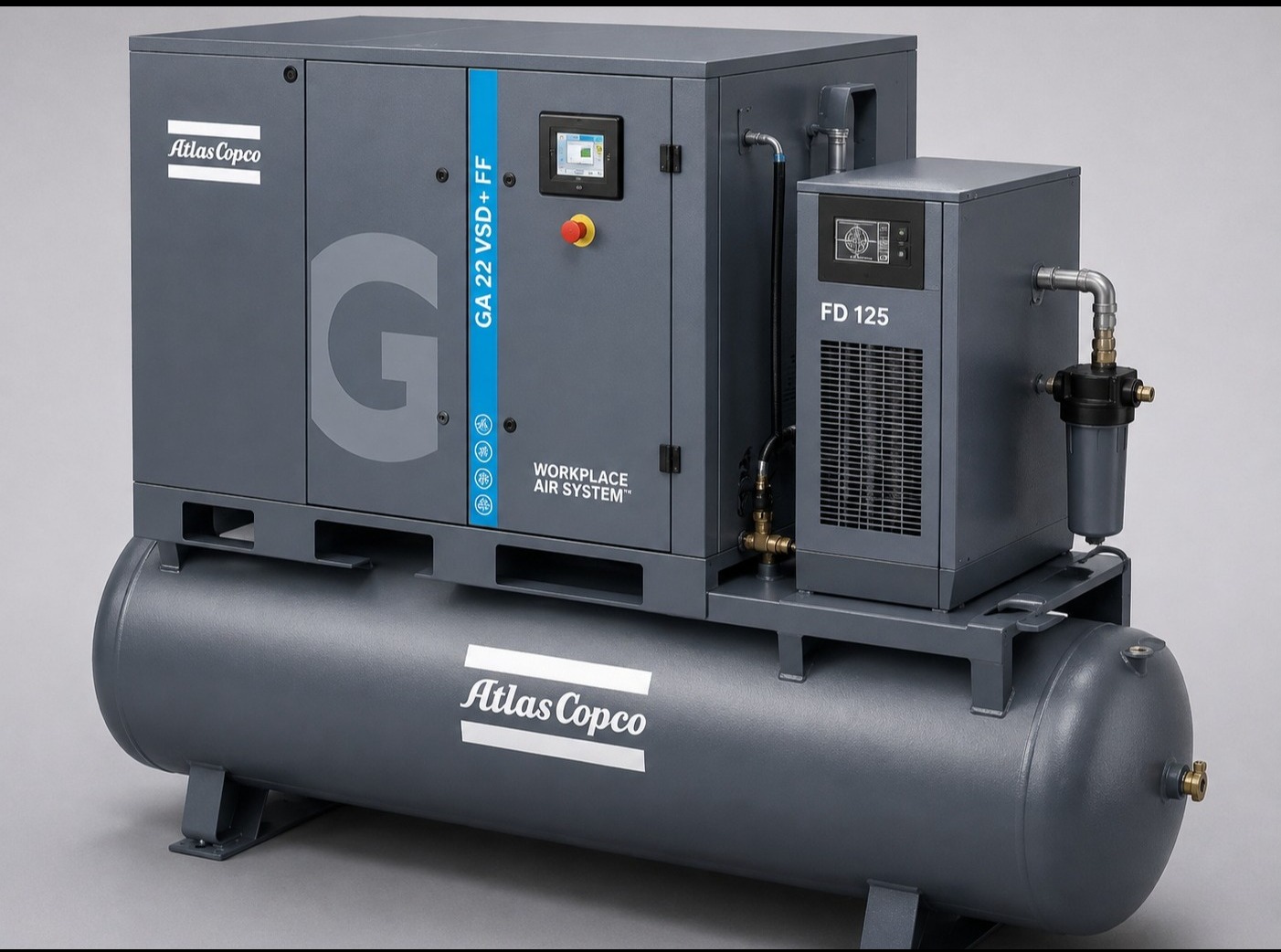
Standard compressed air is sufficient for many pneumatic applications, but certain industrial processes require significantly higher pressure. A High Pressure Air Compressor in Bangalore may be considered for applications where conventional plant air cannot provide the operating pressure needed by specific equipment or processes.
High-pressure compressed air systems require careful engineering because increasing pressure changes energy requirements, heat generation, equipment stresses, and safety considerations. Simply choosing a compressor with a higher pressure rating without studying the application can result in inefficient operation.
The first step is identifying the exact pressure and flow requirement. Users should determine whether high pressure is needed continuously or only during specific production cycles. This distinction can influence equipment selection and system configuration.
Key evaluation points include:
Required discharge pressure
Airflow at the required pressure
Duty cycle
Inlet air conditions
Air quality requirements
Cooling arrangements
Storage capacity
Safety and control requirements
High-pressure compressors can be relevant to specialised manufacturing, testing, process applications, PET-related operations, and other industrial uses. The actual suitability depends on the process rather than simply the industry category.
Heat management becomes increasingly important as air is compressed to higher pressures. Appropriate cooling, ventilation, and equipment placement should be considered during installation. Poor ventilation can contribute to elevated operating temperatures and unnecessary equipment stress.
Air treatment also matters. Moisture present in compressed air can create problems in downstream equipment and processes. Depending on the application, dryers, filters, separators, and drainage arrangements may be required.
Industrial areas across Bangalore and Karnataka contain facilities operating under demanding production schedules. Where high-pressure air is essential to a process, unexpected compressor downtime can interrupt production. Preventive maintenance therefore deserves consideration during equipment selection, not only after installation.
Service access, spare parts availability, inspection requirements, and routine maintenance intervals can all influence the practical ownership experience. Operators should also be trained to recognize abnormal temperatures, pressure fluctuations, unusual noise, and other signs of changing performance.
Energy consumption is another important factor. Generating compressed air at higher pressure generally requires more energy. Where only one part of a facility needs high pressure, businesses should carefully assess whether the entire compressed air network needs to operate at that pressure.
Airprax Pneumatics LLP supports industrial compressed air requirements in Bangalore, including applications where pressure and flow demands need detailed evaluation. Selecting the right solution starts with accurate operating data rather than assumptions.
A high-pressure air system should provide the pressure the process needs without introducing unnecessary energy consumption or operational complexity. Proper sizing, cooling, air treatment, storage, controls, and maintenance planning are all essential elements of a dependable installation.