
Choosing an oil-free blower starts with the process duty, not the motor size or a catalogue airflow figure. By the end, you will be able to separate blower technology from compressor and vacuum requirements, specify usable flow and pressure, set an air-quality target, and assess the sales and service support needed to keep production running.
Key takeaways
- Match blower flow and pressure to your actual process demand.
- Treat oil-free compression and point-of-use air purity as separate checks.
- Compare energy use at operating pressure, not catalogue capacity alone.
- Demand commissioning records, spares, response times, and preventive maintenance terms.
What an Oil-Free Air Blower Does—and Which Machine You Actually Need
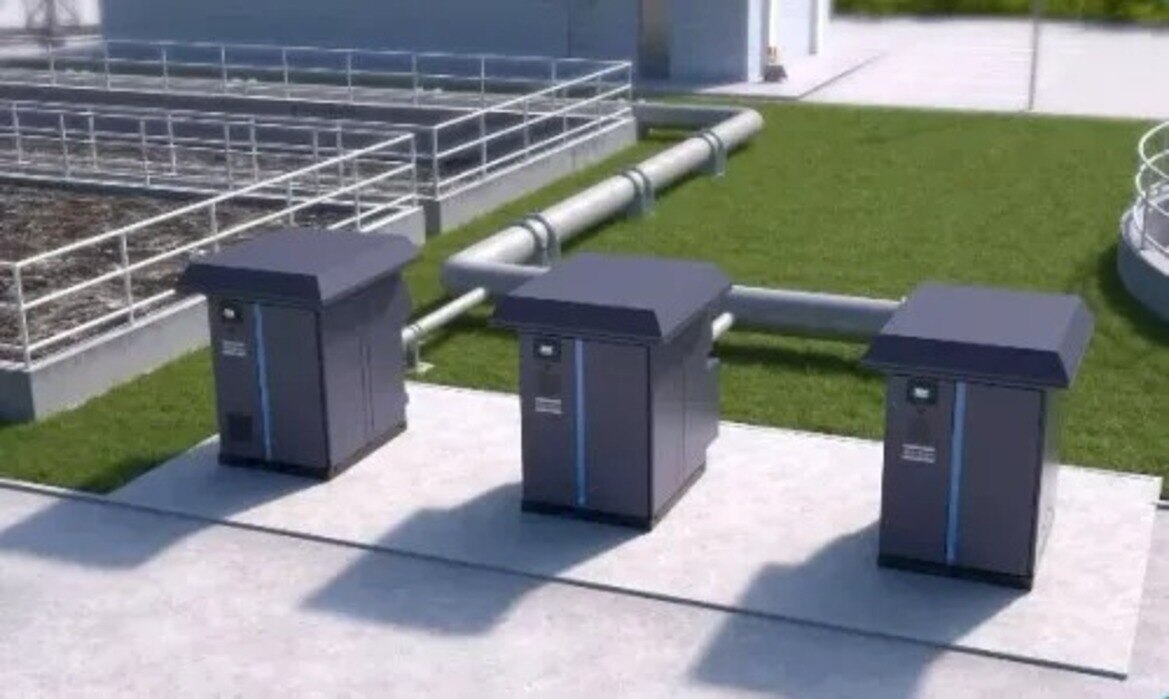
An oil-free air blower moves a large volume of air with no lubricating oil entering the compression chamber. It suits low-to-moderate pressure duties such as aeration, pneumatic conveying, fluidisation, vacuum lifting, fermentation, and process air.
“Oil-free” describes the machine’s compression path, not guaranteed purity at the outlet: dusty intake air, dirty piping, condensate, or process fumes can still contaminate delivery.
Classify the duty before choosing equipment:
- Positive-pressure airflow
- High-pressure compressed air
- Vacuum at a defined suction pressure
| Equipment | What it delivers | When it applies |
|---|---|---|
| Dry-running lobe or screw blower | High airflow at limited pressure | Aeration and conveying |
| Centrifugal blower | Continuous airflow, pressure rises with speed | Large, steady plant demand |
| Regenerative or side-channel blower | Moderate airflow and pressure | Vacuum lifting and smaller conveying duties |
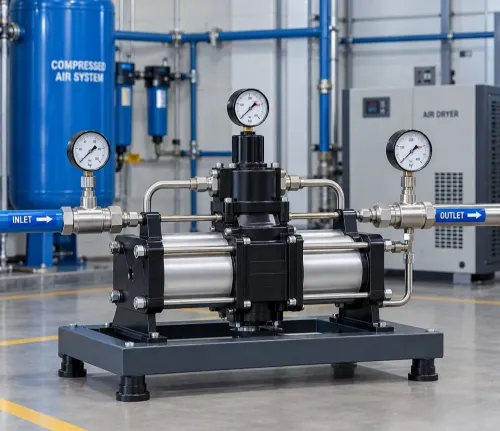
| Oil-free compressor | Higher pressure air | Pneumatic tools, controls, cutting gas, and process equipment |
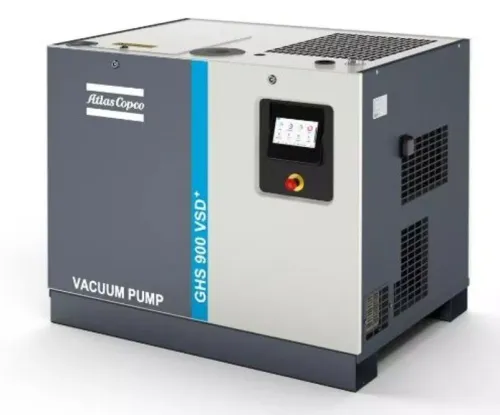
| Vacuum pump | Suction below atmospheric pressure | Vacuum generation, not discharge-air supply |
Roots, screw, scroll, centrifugal, and side-channel designs are all different blower technologies; they do not share the same pressure range, noise, efficiency, or maintenance needs. Oil free blower manufacturer applications therefore provide only a starting point, not a specification.
Check the performance curve at your required inlet volume, discharge pressure, temperature, altitude, duty cycle, and power supply. Do not compare headline free-air delivery with actual flow at pressure. For TRUMPF laser cutting, use the machine’s specified air, nitrogen, or oxygen system instead of treating a blower as a universal gas source.
How to Size a Blower for Real Factory Conditions
Size the blower from required flow at the factory’s actual inlet conditions and discharge pressure, not from a catalogue’s nominal capacity. A blower rated at a reference temperature, pressure, and altitude may deliver less usable air after Bangalore heat, intake losses, elevation, dirty filters, and downstream pressure drop are included.
Collect these inputs before requesting a quotation:
- Minimum and maximum flow, including peak demand, leakage, future expansion, and whether demand is continuous or intermittent.
- Required discharge pressure at the process connection, plus piping, filter, cooler, valve, and elevation losses.
- Inlet temperature, altitude, humidity, dust load, vapour, and process fumes.
- Operating hours, allowable noise, available electrical supply, installation space, and ventilation.
- Required air quality at the point of use, because oil-free compression does not remove dust, water, vapour, or contamination introduced downstream.
Flow figures are not interchangeable:
| Flow figure | What it describes | What to verify |
|---|---|---|
| Free-air delivery | Air referenced to stated inlet conditions | Reference temperature, pressure, and altitude |
| Inlet volume flow | Volume entering the blower | Whether the figure changes with inlet heat, altitude, or filter loading |
| Delivered flow | Usable air at the specified pressure | Performance-curve value after system losses |
Confirm that the duty is actually blower duty, not higher-pressure compressed-air or vacuum duty. For oil free air blower sales and service for manufacturers in bangalore, require commissioning measurements of flow, pressure, temperature, vibration, and power; a service report that only says “preventive maintenance completed” proves little.
Oil-Free Technology Does Not Prove Point-of-Use Air Purity
An oil-free compression chamber does not certify air at your nozzle. Select the machine for required flow, pressure stability, duty cycle, and temperature; a dry-running lobe, screw, centrifugal, scroll, or side-channel design is not interchangeable. Confirm that the duty is blower, compressor, or vacuum duty before comparing quotations.
Treat oil free blower manufacturer applications as starting points, not proof of suitability:
- Food and beverage: specify product-contact air limits, particulate control, and condensate handling.
- Pharmaceutical: define sterile filtration, microbial risk, dew point, and validation points.
- Electronics: control particles, oil vapour, and moisture at the tool, not just at the blower outlet.
- Packaging: verify air quality after receivers, coolers, valves, and point-of-use filters.
- Wastewater: prioritise turndown, dissolved-oxygen control, pressure stability, and intake protection.
- Conveying: match pressure and flow to the material; unstable air can block lines or damage product.
- Textile: prevent dust, lint, water, and oil vapour from reaching jets, looms, or instrumentation.
Write the required class at the point of use under ISO 8573-1:2010. Class 0 means a user-defined limit stricter than Class 1 with no intentional oil addition; it does not mean zero dust, water, or oil everywhere. Sample downstream of the final filter during production, test particles, water and oil, and repeat after installation.
A dirty intake or contaminated pipework can defeat an oil-free blower.
Operating Safeguards, Energy Use, and the Limits of Blower Duty
A blocked discharge can destroy a positive-displacement blower quickly. Fit a correctly sized relief valve, non-return valve, discharge-pressure switch, and controlled start-unload sequence; never rely on an operator to notice a closed isolation valve.
Centrifugal machines need a different safeguard: an anti-surge controller, stable inlet conditions, and a minimum-flow path. Running below the permitted turndown range can cause surge, vibration, temperature rise, and bearing damage.
Use this installation checklist:
- Place the inlet away from dust, solvent vapour, cooling-tower drift, and process fumes.
- Install the specified intake filter and provide access for differential-pressure checks.
- Keep receivers, coolers, valves, and downstream pipework clean before commissioning.
- Route condensate to a functioning drain; do not allow water to collect in low points.
- Provide ventilation around the package and keep hot discharge air from recirculating into the inlet.
- Use variable-speed control or staged unloading only within the manufacturer’s operating envelope.
Trend pressure and flow against commissioning baselines, then watch motor current, bearing temperature, vibration, outlet temperature, filter differential pressure, and drain operation for drift. A loaded filter raises pressure drop and power consumption, so replace it by condition rather than calendar date alone.
Confirm that the duty is actually blower duty. If the process needs higher pressure, a compressor may deliver better efficiency and stability; if it needs suction, specify a vacuum pump instead. Industrial oil-free blower support should include application limits, wear parts, escalation contacts, and temporary-capacity planning before a failure occurs.
What to Demand from a Bangalore Sales and Service Partner
Compare the partner’s engineering and outage plan, not just the blower price. An oil free air blower dealer in bangalore should confirm the duty before recommending equipment:
- Required flow at actual inlet conditions, discharge pressure, minimum and maximum demand, operating hours, altitude, ambient temperature, intake dust load, allowable noise, and continuous or intermittent operation.
- Whether the application needs a blower, compressor, or vacuum machine. A blower used for excessive pressure can overheat, waste power, and operate unstably.
- The performance curve showing delivered flow at your pressure, not catalogue flow at a reference condition.
Check the supplier against these measures:
| Check | Strong partner | Warning sign |
|---|---|---|
| Response plan | Named response time, escalation contact, and temporary-capacity option | “We will attend soon” |
| Spares | Local stock or defined lead times for filters, seals, bearings, drives, and controllers | Every part ordered after failure |
| Maintenance | Baselines and trends for pressure, flow, power, vibration, temperatures, and filter differential pressure | Calendar-only servicing |
| Energy control | Variable speed, sequencing, shutdown during idle periods, and leak review | Oversized single machine |
Ask for a written commissioning record and a service schedule. A filter that loads quickly in Bangalore’s dusty intake conditions can raise pressure drop and energy use long before its calendar replacement date.
For oil free blower service in bangalore, require emergency coverage, spare-part ownership, and restart testing after repairs. Airprax Pneumatics LLP can be compared on these documented controls rather than on the quotation alone; that is industrial oil-free blower support with measurable accountability.
Related products
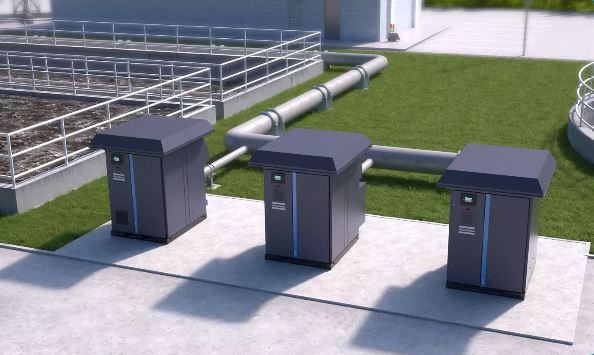 | Air Compressor Airprax Pneumatics LLP, Bangalore, offers reliable oil free air blowers designed to deliver clean, oil-free airflow for a wide range of industrial... View product → |
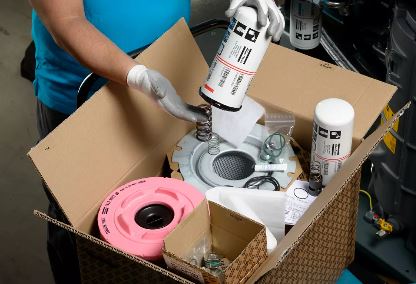 | Air Compressor Air Compressor Service and Spare Parts Airprax Pneumatics LLP, Bangalore, provides comprehensive air compressor service and spare parts solutions to help industries maintain reliable,... View product → |
Frequently asked questions
What does an oil-free air blower do?
It delivers a large volume of air without lubricating oil entering the compression chamber. Common duties include aeration, pneumatic conveying, fluidisation, vacuum lifting, fermentation, and process air at low-to-moderate pressure.
How do you size an oil-free blower for a factory?
Start with required flow and pressure at the point of use, then account for altitude, inlet temperature, filters, pipe losses, leaks, operating hours, and peak demand. Compare performance at your actual operating conditions rather than using free-air capacity alone.
Does an oil-free blower guarantee clean process air?
No. Oil-free compression addresses oil contamination from the compression chamber, but dust, moisture, wear particles, ambient contaminants, and downstream piping can still affect air quality. Specify suitable intake filtration, aftercooling, separation, and point-of-use filtration.
What should you ask an oil-free blower service partner in Bangalore?
Ask for a site assessment, duty-point calculations, commissioning measurements, maintenance intervals, critical-spares availability, response times, warranty terms, and written service reports. Confirm that the partner can troubleshoot the blower, motor, controls, filters, piping, and connected process.