
A purity alarm does not always mean the generator has failed: excessive flow, wet compressed air, a drifting oxygen analyser, and a restricted plant header can produce similar symptoms. By following a fixed test order, you can separate a genuine separation fault from a measurement or distribution problem and give service technicians the data needed to correct it.
Key takeaways
- Verify analyser calibration before resetting a low-purity alarm.
- Trace oxygen contamination from demand points back to separation equipment.
- Check pressure, flow, leaks, and storage before replacing the generator.
- Define purity, capacity, acceptance tests, and response times before commissioning.
Start with the measurements, not the alarm reset
Treat a low-purity alarm as an oxygen-concentration problem first: measure residual O₂ with a verified analyser, then compare it with the specified limit, such as 1%, 0.5%, or 0.1% O₂. Confirm the analyser method and calibration before changing generator settings or resetting the alarm.
Use this nitrogen generator troubleshooting sequence and record every value with a timestamp:
- Confirm the process demand, including required flow, pressure, and any simultaneous users.
- Measure inlet pressure and temperature while the generator is producing gas, not only at idle.
- Check compressor status, dryer performance, drain operation, dew point, and oil or water carryover.
- Record coalescing and carbon-filter differential pressure; replace a saturated or blocked element only after recording its condition.
- Measure outlet pressure, delivered flow, and residual O₂ at the generator outlet and, when possible, at the machine inlet.
- Check analyser calibration, sample tubing, flow restrictor, leaks, and sample venting; incorrect sampling can create a false purity alarm.
- Review valve or solenoid alarms, PSA cycle history, and membrane permeate venting.
- Note receiver pressure and volume, regulator position, and demand at the exact failure time.
Stable O₂ with inadequate pressure or flow points toward compressor capacity, receiver volume, restrictions, leaks, or undersized piping. Unstable O₂ with adequate pressure points toward feed-air quality, separation equipment, sequencing, or measurement. Do not use the product regulator to disguise insufficient generator capacity.
Trace low purity from demand to separation equipment
Low purity usually starts with excessive demand: flow rises beyond the generator’s rated point, or inlet pressure falls below the separation requirement. Confirm residual oxygen, not nitrogen concentration; a specification such as 1%, 0.5%, or 0.1% O₂ depends on the stated flow, pressure, inlet temperature, and test method.
Include peak simultaneous demand, startup purge, reject gas, and short spikes—not only average consumption.
Test the generator in this order:
- Record product flow, outlet pressure, inlet pressure, inlet temperature, dew point, and process demand at the failure time.
- Compare actual flow with the manufacturer’s purity-versus-flow curve. Repeat at a lower controlled flow; purity recovery points to overload rather than failed parts.
- Check compressor output, dryer performance, filter differential pressure, automatic drains, oil carryover, and wet feed air.
- Inspect switching-valve or solenoid alarms, cycle timing, leaks, and abnormal exhaust behaviour.
- Verify analyser calibration with a certified reference gas, then confirm sample flow, tubing condition, pressure regulation, and condensate-free sampling.
- Repeat the test after isolating downstream demand, while retaining time-stamped oxygen readings and alarm history.
| Cause | Test clue | Likely action |
|---|---|---|
| Excessive flow or low inlet pressure | Purity improves at reduced flow | Correct demand or feed pressure |
| Wet, oily, or restricted feed air | High dew point or filter differential pressure | Service dryer, drains, and filters |
| Valve failure or adsorbent deterioration | Purity remains unstable at rated conditions | Inspect sequencing before replacing media |
| Membrane damage or leaks | Flow and oxygen reading disagree | Pressure-test and verify sample integrity |
This sequence targets nitrogen purity problems for manufacturing plants in Bangalore by recording ambient temperature, humidity, power quality, and cooling conditions instead of assuming brochure conditions.
Separate generator capacity from point-of-use supply faults
A stable oxygen reading at the generator outlet with inadequate point-of-use pressure or flow usually indicates a capacity or distribution fault, not a separation fault. Unstable purity with adequate pressure points instead to feed-air quality, switching, adsorbent or membrane condition, sampling, or analyser problems.
1. Confirm the process demand at the failure time. Record peak simultaneous flow, startup purge, reject gas, and short spikes—not the average on a monthly utility bill. Compare that demand with the generator’s rated flow at its stated inlet pressure, temperature, outlet pressure, and purity. A receiver absorbs brief transients; it cannot correct continuous undercapacity.
2. Measure at two locations simultaneously: the generator outlet and the process connection. Record oxygen concentration, pressure, flow, inlet pressure, dew point, and analyser status. Stable outlet purity but falling point-of-use pressure identifies a receiver, regulator, undersized pipe, clogged filter, leak, or competing demand.
3. Isolate branches one at a time. Inspect dead legs, oxygen- or air-used hoses, permeable tubing, leaking valve seats, loose fittings, and process backflow. A contaminated branch can create industrial nitrogen supply problems while the generator produces specification gas.
4. Check the receiver’s stored pressure, then test the distribution line during peak demand. Do not raise the product regulator to disguise a shortage: excessive backpressure can reduce delivered flow and disturb PSA cycling. Compare compressor load with and without nitrogen production during an idle-period leak test.
5. Verify compressor status, dryer performance, coalescing and carbon-filter differential pressure, drains, inlet temperature, valve alarms, and analyser calibration. If generator-outlet purity falls with adequate pressure, investigate wet or oil-contaminated air, saturated filters, failed valves, adsorbent deterioration, or membrane damage before replacing components. Record every time-stamped value so an intermittent fault can be reproduced.
Match the gas specification and technology to the process
Residual oxygen, not the advertised nitrogen percentage, defines the requirement. Set the process specification at the machine inlet: residual O₂, peak and continuous flow, minimum delivery pressure, and dew point. A 0.1% O₂ specification is wasteful if the process accepts 1%; chasing it can increase compressor load while reducing available flow.
| Option | What it suits | Selection point |
|---|---|---|
| PSA generator | Variable demand and lower residual O₂ | Size it for peak flow at the stated purity and pressure; include a receiver and startup reject line |
| Membrane generator | Steady demand at moderate purity | Confirm feed-air pressure, temperature, permeate venting, and pretreatment against the design envelope |
| Cylinder or bulk backup | Critical processes and planned outages | Size stored gas for required flow, outage duration, regulator capacity, and automatic changeover |
Specify generator performance at the same conditions you will measure: inlet pressure and temperature, product pressure, flow, and dew point. A long pipe, restrictive regulator, or shared header can leave a laser head below pressure even when the generator outlet passes its test.
For PSA equipment, route product to vent until the specified startup or restart cycles finish after shutdown, maintenance, or instrument-air loss. For membrane equipment, investigate blocked filters, incorrect permeate flow, feed-air temperature, and fibre damage rather than applying PSA valve diagnostics. Choose backup autonomy from the consequence of interruption, not from the purity number.
Set acceptance tests and service expectations before relying on the system
Before commissioning, write the acceptance point in measurable terms: residual oxygen, product flow, outlet pressure, dew point, and the inlet conditions at which each value must hold. Do not accept “high purity” without a stated O₂ limit, such as 1%, 0.5%, or 0.1%, and a named test method.
- Record compressor discharge pressure, inlet-air temperature, ambient temperature, relative humidity, power quality, dryer dew point, filter differential pressure, ventilation or cooling-water conditions, and point-of-use pressure.
- Run the system at peak simultaneous demand, including startup, purge, reject gas, and short demand spikes. Measure time-stamped O₂, flow, pressure, inlet conditions, analyser status, valve or solenoid alarms, and compressor load.
- Prove supply capacity with nonessential branches isolated, then inspect couplers, hose reels, regulators, drains, and fittings for leaks. A receiver absorbs short transients; it cannot fix continuous undersupply.
- Ask whether the unit is PSA or membrane technology and request its specified feed pressure, temperature, flow, pretreatment, and permeate-vent requirements. Do not apply PSA valve diagnostics to a membrane system before checking filters, venting, and fibre damage.
- Require a calibration certificate or analyser check, commissioning report, alarm history, preventive-maintenance interval, response time, spare-parts plan, and escalation contact.
For nitrogen generator support in bangalore, Airprax Pneumatics LLP can be assessed against this evidence rather than a brochure rating. Make the provider sign the acceptance readings and define what happens when purity, pressure, or flow falls outside them.
Related product
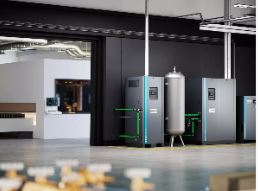 | Nitrogen Generators Airprax Pneumatics LLP, Bangalore, offers reliable nitrogen generators designed to produce high-purity nitrogen on-site for a wide range of... View product → |
Frequently asked questions
What should you check first when nitrogen purity falls?
Measure residual oxygen with a verified analyser, confirm calibration, and compare the reading with the specified limit before resetting alarms.
What causes low nitrogen purity in a manufacturing plant?
Causes include incorrect demand, leaks, inadequate feed-air quality, insufficient pressure or flow, separation-equipment faults, and analyser errors.
How can you tell whether the generator or point of use is at fault?
Compare purity and pressure at the generator outlet, storage vessel, distribution line, and final point of use to locate the fault.
What should a nitrogen generator acceptance test include?
Specify oxygen purity, outlet pressure, flow at operating conditions, recovery time, alarm limits, sampling points, and documented service response times.