
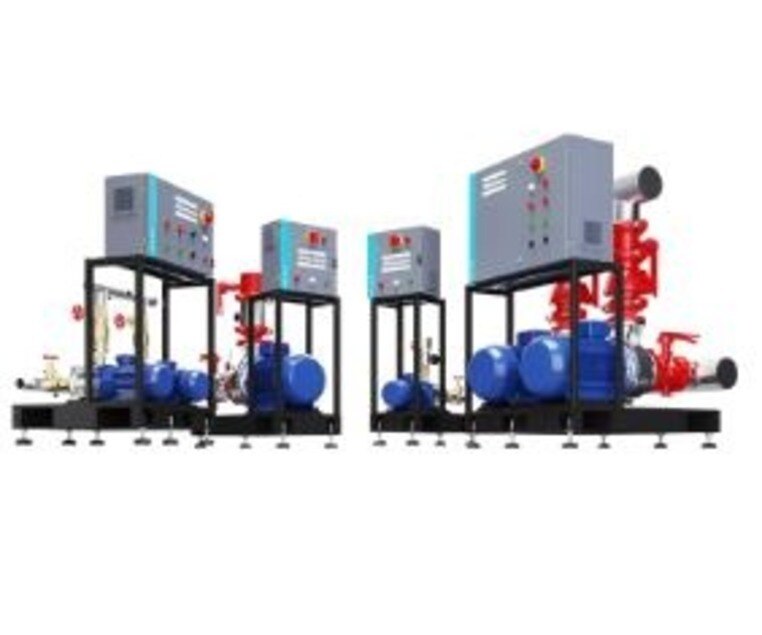
Choosing a chiller by nameplate capacity leaves out the pumps, tanks, valves, filtration, controls and heat rejection that determine whether a food plant actually holds temperature. You will be able to compare each support component by cooling duty, hygiene risk, water use, energy demand, installation constraints and lifecycle cost, then build a site-specific specification for Bangalore conditions.
Key takeaways
- Separate process fluid from utility water with a hygienic heat exchanger.
- Calculate peak cooling duty before sizing pumps, chillers or dry coolers.
- Choose towers only when water treatment, hygiene controls and plume management fit.
- Prove performance with logged temperatures, flow, pressure and power readings.
What counts as a cooling ancillary, and what does each item replace or support?
A cooling ancillary is equipment that circulates, expands, filters, controls, protects or rejects heat around a process-cooling system. It is process cooling support equipment, not the primary machine that removes heat from the process loop.
| Item | Function and location | Main trade-offs |
|---|---|---|
| Water chiller | Removes heat from chilled water; installed beside the process plant | Creates refrigeration capacity; highest capital, electrical load and maintenance burden |
| Dry cooler | Rejects heat to outdoor air; installed outdoors | No evaporative water or Legionella exposure, but capacity falls as dry-bulb temperature rises; fan noise and footprint increase |
| Cooling tower | Rejects heat through evaporation; installed outdoors with condenser pumps | Efficient heat rejection, but adds makeup water, blowdown, chemicals, biological control and hygiene risk |
| Heat exchanger | Transfers heat between separate circuits | Protects product and utility loops; adds pressure drop, footprint, cleaning and gasket failure risk |
| Pump | Circulates fluid through piping, valves and exchangers | Select for flow, system-curve head, NPSH and turndown; consumes energy and creates noise |
| Expansion vessel; buffer or decoupling tank | Manages volume, thermal expansion, peaks and separate flow circuits | Adds stability and reduces short cycling; occupies space and cannot create missing chiller capacity |
| Strainer, fine filter, valves, flow switch, sensors and panel | Protect, isolate, measure and control the circuit | Coarse strainers protect pumps; fine filters add pressure drop and cleaning work; failed instruments stop production |
| Dosing, treatment and insulated piping | Controls scale, corrosion and biological growth; conveys and preserves temperature | Reduces fouling and heat loss, but adds chemical, inspection and installation cost |
An expansion tank adds value in a closed loop with thermal volume change; a buffer tank earns its space when loads fluctuate. Fine filtration belongs where contamination threatens the exchanger, not automatically at every pump discharge. This industrial cooling accessories comparison should weigh flow, pressure drop, footprint, noise, hygiene, maintenance, energy and capital cost.
How do you calculate cooling duty and select process temperatures?
Calculate sensible product duty as Q = m × Cp × (Tin − Tout), using peak mass flow, product specific heat, and the required temperature change. Add latent heat for freezing, plus pull-down demand when incoming product must reach process temperature within a defined recovery time.
Add the simultaneous loads:
- Heat through walls, ceilings, doors and openings
- Motors, fans and pumps inside the cooled space
- Lighting and people
- Defrost heaters and hot-gas defrost
- Compressed-air aftercoolers and associated dryers
- Peak production lines operating together
- Cleaning, wash-down and equipment heat released during changeover
Use peak production, not average hourly throughput. Check that the selected duty fits operating hours and restores temperature within the required recovery time.
| Application | Select supply temperature and rise from | What goes wrong with a generic 7°C setpoint |
|---|---|---|
| Dairy and beverage filling | Product specification, exchanger approach and hygiene limits | Product warms, or the exchanger needs excessive area |
| Fermentation | Recipe temperature, heat-release rate and control band | Fermentation drifts outside its target |
| Cold rooms and baking | Room load, pull-down rate and product limits | Recovery becomes slow after loading or door opening |
| Wash-water systems | Required outlet temperature, flow and cleaning cycle | Water misses sanitation temperature or wastes cooling energy |
For food processing cooling equipment in Bangalore, choose supply temperature and allowable rise from the product and heat exchanger, not a default setting. A narrow rise increases flow and pump energy; a larger rise reduces flow but can weaken product control or demand more exchanger area.
At commissioning, measure inlet temperature, outlet temperature, flow and product throughput, then calculate actual cooling kilowatts. Trend these against compressor loading and recovery time to distinguish inadequate capacity from low flow or fouling.
How should you design the circuit, pump duty and hygienic separation?
After the heat load is known, calculate circulation flow as Q = cooling duty ÷ (fluid specific heat × allowable temperature rise). Use mass flow for glycol mixtures, then convert it to volumetric flow at operating temperature; a narrow temperature rise increases flow, pipe size and pump energy.
Calculate pump head from straight-pipe friction plus elevation, valves, strainers, filters, heat exchangers, fittings and fouling allowance. Select the duty point on the actual system curve, not the pump’s maximum catalogue flow, and check available NPSH, minimum flow, hygienic drainability and variable-speed turndown. Oversizing creates throttling, noise and poor control.
Circuit choice changes water use and maintenance exposure:
- Open circuit: simpler heat rejection, but higher water consumption and exposure to contamination, scaling and corrosion.
- Closed loop: lower water use, but requires air removal, expansion control, inhibitor checks, vents, drains and cleaning access.
| Circuit | Main risk | Required controls |
|---|---|---|
| Open | Contamination, scale and corrosion | Filtration, dosing, blowdown and cleaning |
| Closed | Trapped air, pressure expansion and stagnant zones | Air separator, expansion vessel, inhibitor checks and drainable layout |
Use inhibited propylene glycol where freezing risk exists near pipework or equipment. Specify glycol type, concentration, freeze point and viscosity; verify concentration with a refractometer. Excess glycol raises head and motor demand while reducing heat transfer.
For food-contact or food-adjacent cooling, specify product-side materials, compatible gaskets, weld finish, drainability, clean-in-place velocity and leakage detection. Keep product and utility circuits separate, and align the design with the HACCP plan and 3-A or EHEDG principles where applicable. These details belong in any industrial cooling accessories comparison and define reliable process cooling support equipment.
Which heat-rejection option suits Bangalore: dry cooler, tower, chiller or hybrid?
Choose against the site’s summer design dry-bulb and wet-bulb temperatures, not Bangalore’s annual average. Check the required leaving-water temperature, electrical reliability and available water before comparing equipment.
| Option | Best fit | Main constraint |
|---|---|---|
| Dry cooler | Required leaving-water temperature is achievable at design dry-bulb temperature; no evaporative water use | Capacity and efficiency fall as dry-bulb temperature rises |
| Air-cooled chiller | Process water must stay colder than outdoor air can provide | Higher ambient temperature raises compressor power and reduces capacity |
| Cooling tower | Water loop can reject heat near the design wet-bulb temperature | Requires makeup water, treatment, blowdown and biological control |
| Water-cooled chiller | Full-load efficiency matters and reliable water services exist | Adds condenser pumps, tower fans, chemicals and blowdown |
| Hybrid system | Dry operation covers suitable conditions; refrigeration assists during hot or peak periods | More controls, equipment and failure modes |
A demanding low leaving-water temperature, high ambient temperature or low approach can favour a chiller, tower or hybrid system. If outages threaten production, include standby pumps, generator-backed controls and a defined restart sequence.
Specify a tower’s entering-water temperature, leaving-water temperature, flow, range and approach separately. Range is the water temperature drop; approach is leaving water minus entering-air wet-bulb temperature. Nominal tons alone are insufficient.
Control blowdown by conductivity, then add side-stream filtration, corrosion and scale inhibitors, basin cleaning, microbiological monitoring and Legionella control. For industrial cooling ancillaries for food processing plants in bangalore, Airprax Pneumatics LLP can tie pumps, tanks, controls, treatment and heat rejection to the site assessment.
That prevents food processing cooling equipment in bangalore from being selected by chiller size alone.
Related products
 | Industrial Chillers Ancillaries For Industrial Cooling Airprax Pneumatics LLP, Bangalore, provides a comprehensive range of ancillaries for industrial cooling systems, designed to support efficient,... View product → |
 | Industrial Chillers Airprax Pneumatics LLP, Bangalore, provides industrial water chillers designed for efficient and reliable process cooling in a wide range of... View product → |
How do you compare total ownership cost and prove the system is working?
Compare total ownership cost, not just purchase price. For an industrial cooling accessories comparison, record peak and part-load kW per unit of cooling, then include maintenance time and production risk.
| Option | Cost and operating evidence | Main exposure |
|---|---|---|
| Air-cooled chiller or dry cooler | No evaporative water, blowdown or tower chemicals; performance falls as dry-bulb temperature rises | Fan, coil and refrigerant serviceability |
| Water-cooled chiller and tower | Better full-load efficiency; measure makeup water, conductivity-controlled blowdown and chemical use | Pump, tower, biological control and water-treatment costs |
| Hybrid system | Switches heat rejection to suit ambient conditions and water availability | More valves, controls and spares |
Use this procurement and commissioning checklist:
- Price filter, gasket and clean-in-place replacement, refrigerant access, spare-parts lead time, redundancy and the consequence of each single-point failure.
- Measure supply and return temperature, flow, pressure differential, compressor loading, condenser approach, tower conductivity, makeup water, blowdown, alarms and energy trends.
- Include compressed-air aftercoolers, which remove bulk heat and condensate, plus refrigerated or desiccant dryers when pneumatics affect the process. Refrigerated dryers use less energy; desiccant dryers achieve lower pressure dew points but consume purge air or heater energy.
A buffer tank reduces short cycling and absorbs brief production peaks; it cannot repair an undersized evaporator or condenser. Size usable volume from process flow, temperature band and compressor cycling frequency, then check mixing and short-circuiting.
These measurements distinguish low flow, fouling, air in the circuit and sensor error from genuine lack of chiller capacity. That discipline matters when selecting food processing cooling equipment in Bangalore.
Frequently asked questions
What counts as a cooling ancillary in a food processing plant?
Cooling ancillaries include circulation pumps, expansion vessels, strainers, filters, valves, sensors, controls, heat exchangers and heat-rejection equipment. They support the primary cooling machine by moving, conditioning, protecting or rejecting heat from the process loop.
How do you calculate cooling duty and select process temperatures?
Calculate sensible duty from mass flow, specific heat and the required temperature change, then add product, equipment, ambient and safety loads. Set supply and return temperatures from the process specification, product limits and the heat exchanger approach temperature.
How should a hygienic cooling circuit be designed?
Use a closed secondary loop and separate it from food-contact fluids with a hygienic heat exchanger. Specify drainable pipework, suitable materials, accessible filters, isolation valves, pressure protection and pumps that deliver the required flow at total dynamic head.
Which heat-rejection option suits a food plant in Bangalore?
Choose a dry cooler when water conservation and low maintenance matter, a cooling tower when ambient conditions and continuous water treatment support evaporative rejection, and a chiller when tight process temperatures are essential. A hybrid system combines these options when seasonal or load variation justifies the added controls and equipment.
How do you compare ownership cost and prove a cooling system works?
Compare purchase, installation, electricity, water, treatment chemicals, maintenance, downtime and replacement costs over the evaluation period. Verify operation with logged supply and return temperatures, flow, pressure, ambient conditions, compressor or fan power and calculated cooling duty.
Related product
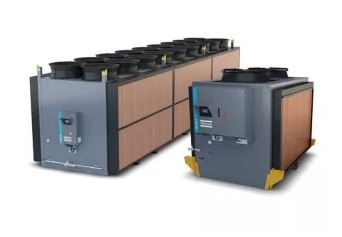 | Industrial Chillers Airprax Pneumatics LLP, Bangalore, offers the TDV Dry Coolers Series, designed to provide efficient and reliable heat rejection for industrial... View product → |