
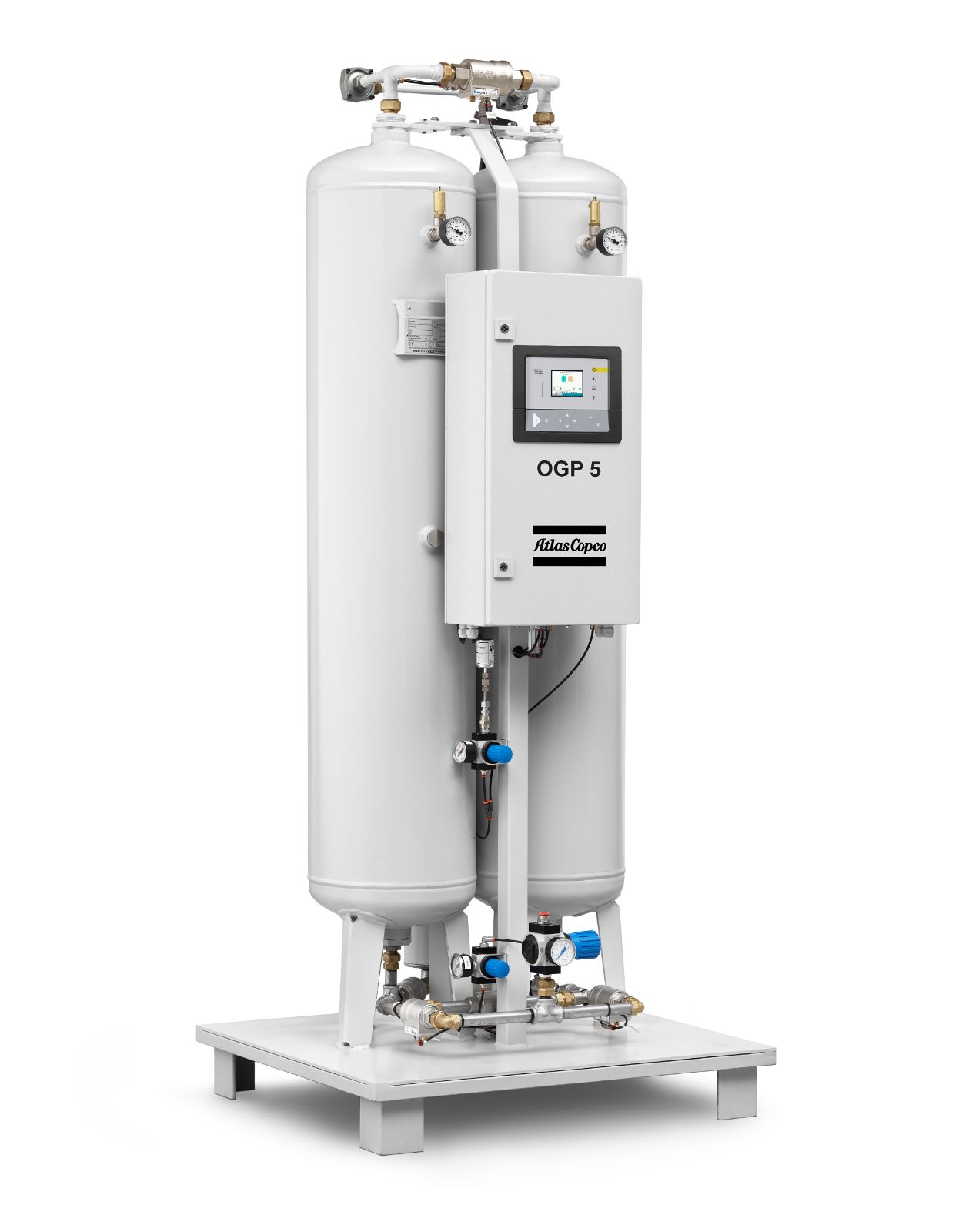
Oxygen generators separate oxygen from air so that the gas can be fed into industrial processes in real-time or stored in pressure tanks. Oxygen generators are used in dozens of industrial applications ranging from gold mining to aquaculture to life support. Normal ambient air is made up of 78% nitrogen, 21% oxygen and other trace gases like argon and CO2. In order to remove the nitrogen and trace gases an oxygen generator is used. The smallest oxygen generators can be no larger than a soda can, while industrial oxygen generators can be as large as a bus. However, all oxygen generators have the same purpose: to provide a safe supply of concentrated oxygen gas. Medical grade oxygen used in hospitals or for home health care is certified to meet the United States Pharmacopeia (USP) XXII Oxygen 93% Monograph. USP requirements are the oxygen level is between 90 and 96% pure with the remainder made up of argon and hydrogen. No more than 300ppm of CO2 or any other gases or molecules are allowed. The way an oxygen concentrator works is relatively simple. The machine pulls in air, and that air travels through a compressor. The compressed air goes into a sieve bed filter system that has two prongs. When the compressed air goes into the first sieve bed, nitrogen is removed while oxygen is forced into the tank.
#Aircompressor #compressor #Atlascopco #AtlascopcoCompressor #OilFreeAirCompressor #IndustrialAirCompressor #PistontypeAirCompressor #ScrewtypeAirCompressor #Peenya #Airdryer #dryer #AtlascopcoAirDryer #RefrigerantAirDryer #DesiccantAirDryer #Oxygen #OxygenGenerator #Industrialoxygenplant #Medicaloxygenplan #BestOxygenGenerator #Hosur #Nitrogen #NitrogenGenerator #NitrogenGeneratorplant #BestNitrogenGenerator #Bangalore #Vacuumpump #AtlscopcoVaccumpumps #AirFilters