
A chiller quotation covers only the refrigeration machine unless the supplier defines the surrounding equipment and site work line by line. By the end, you will be able to identify the included accessories, compare cooling arrangements, check installation boundaries, and prepare a commissioning and water-quality checklist.
Key takeaways
- Specify heat load and operating temperatures for every connected machine.
- Confirm whether pumps, tanks, filters, valves, piping, and controls are included.
- Check flow, pressure, temperature, electrical supply, leaks, and alarms before commissioning.
- Set water quality limits and maintenance responsibilities in the supply documents.
What equipment belongs in an industrial cooling ancillary supply?
The ancillary supply is the complete connection between the cooling source and each machine, not merely the chiller. Begin with the heat load and operating temperatures of every laser source, cutting head, induction unit, hydraulic power pack, compressor aftercooler, vacuum pump, and process tank.
1. Record entering and leaving-fluid temperatures, design flow, fluid type, operating hours, simultaneous-load assumptions, ambient design temperature, and required supply stability. State minimum and maximum flow, temperature limits, filtration or conductivity limits, and the machine-controller trip signals.
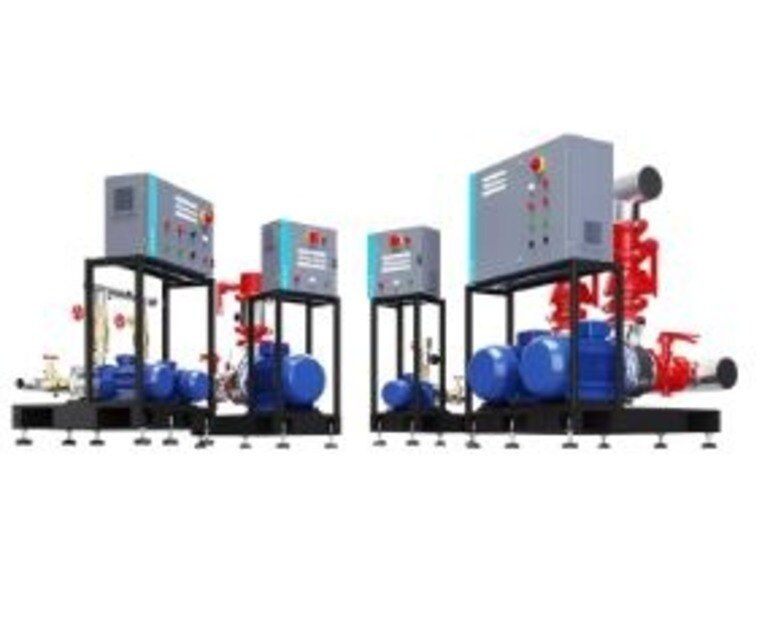
2. List the hydraulic hardware: duty and standby circulation pumps, suction strainers, dirt separators, isolation valves, non-return valves, balancing or control valves, flow switches or meters, pressure and temperature gauges, sensors, expansion vessels, pressurisation equipment, drains, automatic air vents, air separators, flexible connectors, and interconnecting pipework.
3. Add a buffer tank only for low water volume, rapidly changing load, minimum compressor run-time requirements, or short-cycling risk. Calculate its volume from minimum stable chiller capacity and permitted temperature band.
4. Specify the electrical and controls package: panel, starters or VFDs, overload and phase-loss protection, alarms, remote start/stop, emergency-stop interface, and BMS or PLC signals.
5. Schedule vacuum and compressed-air provisions separately, including heat rejection, exhaust handling, aftercoolers, separators, drains, filters, oil cooling, and purge gas.
Mark every item included, optional, or by others. This is the practical scope behind industrial cooling for ancillary supply inclusions in Tumkur.
How should you choose the cooling arrangement and its accessories?
Choose the cooling architecture from the process limits, not from the chiller label. Compare every bid using cooling load in kW or TR, leaving-water temperature, flow rate, fluid type, ambient design temperature, altitude, duty cycle, redundancy, installation location, and available voltage and frequency.
| Option | Strength | Checks and limitations |
|---|---|---|
| Air-cooled chiller | Works without condenser-water infrastructure | Capacity and efficiency fall as outdoor air temperature rises; verify condenser clearance, ventilation, noise, and stated ambient rating. |
| Water-cooled chiller with tower | Improves heat rejection in a suitable plant | Include condenser pumps, basin make-up, overflow, blowdown, fan controls, drift control, water treatment, side-stream filtration, and cleaning access. |
| Dry cooler | Supports heat rejection, free cooling, or a hybrid circuit | It cannot cool below the available outdoor approach temperature without mechanical refrigeration; check seasonal changeover and worst-case ambient. |
| Cooling tower alone | Rejects heat to atmosphere | It cannot replace a chiller where the machine needs stable temperature below ambient wet-bulb conditions. |
Reject the tower arrangement if water availability, treatment capability, hygiene controls, or plume restrictions cannot be managed. A dry cooler suits free cooling only when outdoor air is cool enough to meet the process leaving-fluid temperature.
For a water-cooled system, price condenser pumps, water treatment, conductivity control, basin cleaning, and filtration as part of the arrangement rather than hidden exclusions. For any architecture, match pump duty, control valves, sensors, alarms, and redundancy to the duty cycle and installation location. That is how you specify industrial cooling ancillary equipment in tumkur.
Which items are included, optional, or left to the site owner?
Read an industrial chiller ancillary package in Tumkur line by line, not by its headline price. Require a marked-up schedule with four columns: line item, included, optional, and by others.
| Line item | Included | Optional | By others |
|---|---|---|---|
| Chiller, circulation pump or duty-and-standby pumps, strainer, isolation and non-return valves | State model and quantity | Standby pump or upgraded valve | — |
| Flow switch or meter, pressure and temperature instruments, expansion vessel, air vent, drain and fill connections | State range and connection size | Remote sensors or pressurisation unit | — |
| Flexible connectors, pipework, insulation, labels, control panel, alarm interlocks and commissioning | Separate supply from installation | VFD, BMS gateway or extra insulation | Installation labour if excluded |
| Lifting, foundations, plinths, floor-loading checks, cable trays, power cabling, earthing and pipe supports | — | — | Identify the responsible contractor |
| Wall penetrations, condensate drains, ventilation, water, glycol, chemical dosing and civil repairs | — | — | Name the site owner or builder |
Ask whether the quoted pump includes motor power and whether pump heat is included in the refrigeration rating. Confirm that controls provide high-temperature, low-flow, high-pressure, overload, phase-loss, emergency-stop and common-fault signals.
For an open tower, mark make-up water, conductivity control, blowdown, scale and corrosion inhibitor, microbiological treatment, drift eliminators, basin cleaning and side-stream filtration separately. Airprax Pneumatics LLP can help structure this boundary review; demand the marked-up bill of supply, drawings, datasheets, exclusions and acceptance tests.
That is what cooling system accessories included must mean in a comparable tender.
Related products
 | Industrial Chillers Ancillaries For Industrial Cooling Airprax Pneumatics LLP, Bangalore, provides a comprehensive range of ancillaries for industrial cooling systems, designed to support efficient,... View product → |
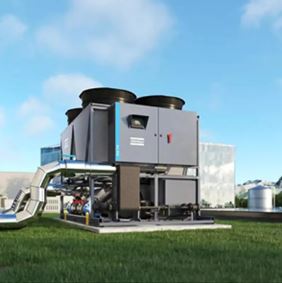 | Industrial Chillers Airprax Pneumatics LLP, Bangalore, provides industrial water chillers designed for efficient and reliable process cooling in a wide range of... View product → |
What must be checked before the system is commissioned?
A factory test certificate does not prove that an industrial chiller ancillary package in Tumkur delivers the required flow after installation. Commission the package against the connected machines, not the chiller nameplate.
1. Flush every pipe before connecting sensitive heat exchangers. Remove debris from strainers, and confirm flushing water cannot enter equipment excluded by its manufacturer. Pressure-test the circuit at the equipment maker’s permitted test pressure, then inspect every joint for leaks.
2. Inspect pipe supports, expansion allowance, insulation, drainability, air-vent locations, service clearances, and freeze protection for low-temperature fluid or exposed pipework. Poor support can cause vibration; trapped water can split pipework during freezing.
3. Check pump rotation before sustained operation. Confirm suction conditions, open the correct isolation valves, remove trapped air, and measure flow at every branch. Do not accept the pump nameplate as proof of machine flow.
4. At design load, record supply and return temperatures, pressure drop across filters and heat exchangers, pump current, and system pressure. Verify fluid concentration against the connected equipment maker’s limit.
5. Test high-temperature, low-flow, high-pressure, overload, phase-loss, emergency-stop, remote start/stop, and common-fault interlocks. Confirm the chiller, machine controller, BMS, or PLC exchanges each intended signal.
6. Check minimum and maximum flow, temperature limits, fluid concentration, set points, and trip delays against each machine’s interface requirements. Record the results as the installed baseline, including actual site conditions in Tumakuru.
How do water quality and maintenance affect the supplied accessories?
Water quality determines whether supplied heat exchangers remain efficient or become restricted by scale, sludge, corrosion, or biological growth. Test proposed fill water; do not assume municipal or borewell water is suitable.
1. Compare hardness, suspended solids, conductivity, corrosion tendency, biological-growth risk, and glycol concentration with the chiller and process-machine instructions. Do not select treatment chemicals or acceptance limits without site-water analysis and manufacturer guidance.
2. Specify the cooling system accessories included for each circuit. A closed loop commonly needs a fill connection, air separator or vent, dirt separator or strainer, expansion vessel, drain, and chemical-dosing or water-treatment provision.
An open cooling tower additionally needs basin make-up, overflow, blowdown, conductivity control, scale and corrosion inhibition, microbiological control, drift management, side-stream filtration, and a basin-cleaning method.
3. Put maintenance intervals in the supply schedule: strainer inspection frequency, pressure-drop recording, filter-element replacement, and heat-exchanger cleaning method. For glycol systems, record concentration with a suitable instrument and verify freeze protection after every refill.
4. For compressed-air cooling, specify the aftercooler, moisture separator, automatic drain, receiver, dryer, and filtration pressure-drop limits. State clean and end-of-life values, drain type, element-change indication, and bypass or isolation arrangements.
5. For vacuum pumps, check oil separation, exhaust filtration, oil cooling, room ventilation, or purge gas according to pump type. These provisions make industrial cooling ancillary equipment in Tumkur dependable rather than merely listed.
Frequently asked questions
What equipment belongs in an industrial cooling ancillary supply?
The supply can include pumps, buffer or expansion tanks, piping, hoses, isolation valves, strainers, filters, flow switches, pressure gauges, temperature sensors, control panels, and machine connection kits. The exact list depends on the heat load, flow rate, operating temperature, and distance between the cooling source and each machine.
How should you choose the cooling arrangement and its accessories?
Start with each machine's heat load, required supply and return temperatures, flow rate, pressure, fluid type, and allowable temperature variation. Then select the chiller, pump capacity, tank volume, pipe size, filtration, controls, and heat-rejection arrangement as one system.
Which cooling system accessories are included, optional, or left to the site owner?
A written scope should identify supplied items such as pumps, tanks, valves, sensors, filters, controls, and connection hoses. It should separately identify optional redundancy, remote monitoring, water-treatment equipment, spare parts, civil works, electrical cabling, drainage, cooling-tower work, and building modifications assigned to the site owner.
What must be checked before the system is commissioned?
Verify pipe routing, connection sizes, valve positions, electrical supply, earthing, pump rotation, flow rate, pressure, supply and return temperatures, leak-free joints, alarm operation, and machine interlocks. Flush the circuit, clean strainers, fill the specified fluid, and record baseline readings before handover.
How do water quality and maintenance affect supplied accessories?
Untreated or contaminated water can block strainers, damage pumps, foul heat exchangers, and reduce cooling performance. Define conductivity, hardness, pH, corrosion protection, filtration, cleaning intervals, inspection points, and replacement responsibilities before operation.
Related product
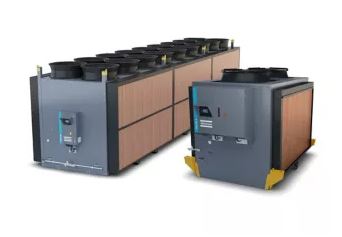 | Industrial Chillers Airprax Pneumatics LLP, Bangalore, offers the TDV Dry Coolers Series, designed to provide efficient and reliable heat rejection for industrial... View product → |