
Compressed air is an essential utility across manufacturing, fabrication, automotive, packaging, engineering, pharmaceutical, food processing, and many other industries. Choosing the right Air Compressor in Bangalore is therefore not simply about buying equipment with a suitable motor rating. The compressor must match the actual air demand, operating pressure, duty cycle, air quality requirement, and future production needs of the facility.
Industrial users should begin by determining how much compressed air their equipment consumes. Pneumatic tools, cylinders, production machinery, packaging lines, and process equipment can have very different flow requirements. If a compressor is undersized, pressure may drop during peak production periods. An oversized unit, on the other hand, may operate inefficiently and increase energy costs.
Important factors to consider include:
Required airflow or CFM
Working pressure
Operating hours per day
Expected load fluctuations
Air quality requirements
Available installation space
Ventilation conditions
Noise considerations
Future capacity requirements
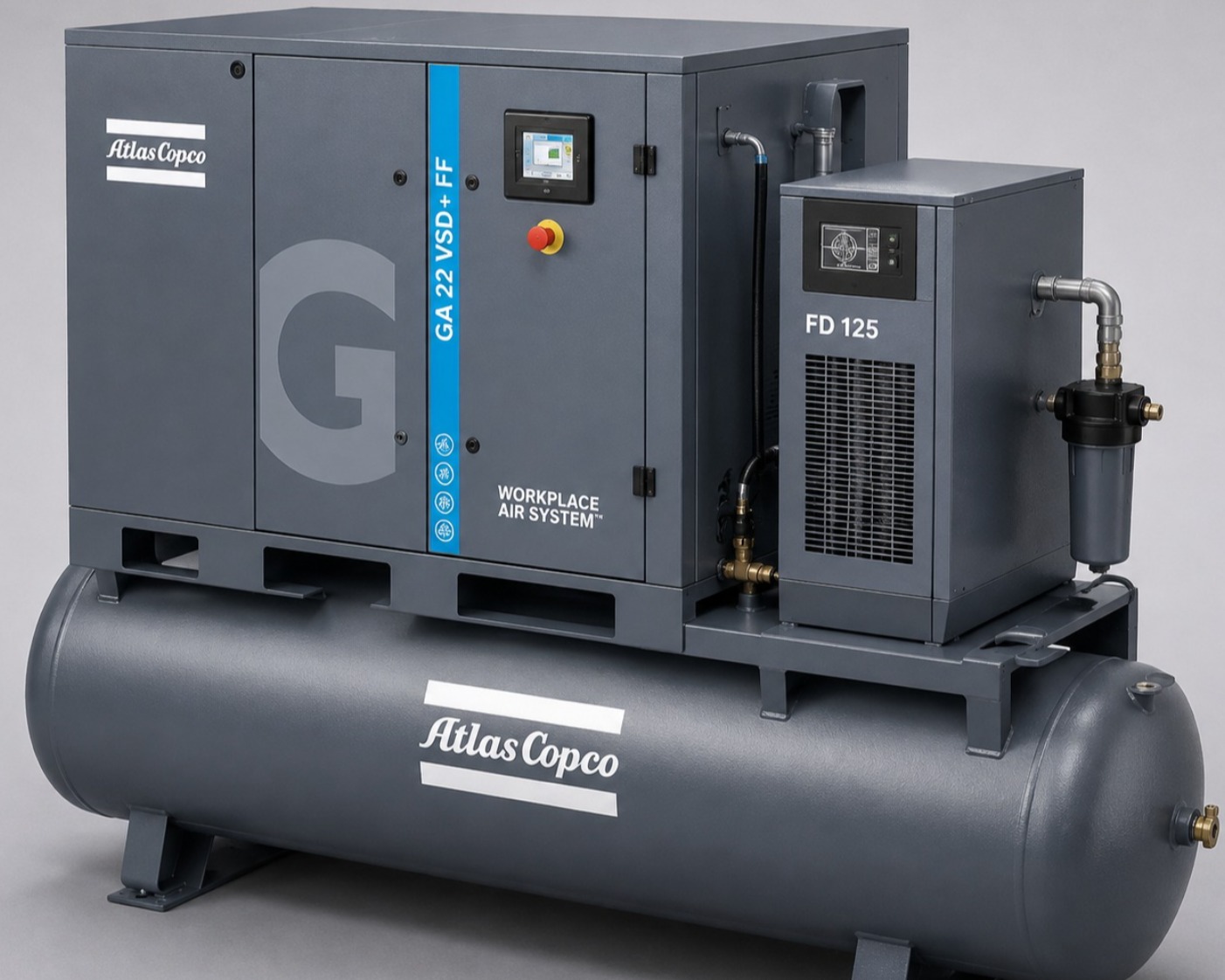
The type of compressor also matters. Different industrial environments may use rotary screw, reciprocating, oil-free, or other compressor configurations depending on their operational needs. Facilities requiring continuous compressed air generally evaluate equipment differently from workshops where demand is intermittent.
Air quality deserves equal attention. Moisture, oil carryover, and contaminants in compressed air can affect pneumatic components and sensitive production processes. Depending on the application, a complete system may include air dryers, filters, receivers, drains, and appropriate distribution piping.
Energy efficiency is particularly important for factories operating multiple shifts. A compressor may remain in service for thousands of hours each year, so its electricity consumption can significantly influence operating expenses. Looking only at the initial purchase price may therefore give an incomplete picture of the actual cost of ownership.
Bangalore and the wider Karnataka industrial market include businesses ranging from precision engineering units to large manufacturing plants. Their compressed air requirements can differ considerably. A Peenya manufacturing unit, for example, may have different operating conditions from a fabrication facility in Bommasandra or an industrial operation around Jigani.
Another practical consideration is after-sales support. Preventive maintenance, timely servicing, filters, lubricants, replacement parts, and technical troubleshooting can help maintain stable compressor performance over its service life.
Before finalizing a system, businesses should document current consumption and anticipated expansion. Adding new pneumatic machines later without considering compressor capacity can create pressure instability and unnecessary equipment strain.
Airprax Pneumatics LLP supports industrial customers evaluating compressed air equipment and related solutions in Bangalore. A properly selected compressor should ultimately deliver the required pressure and airflow reliably while supporting energy efficiency, maintainability, and production continuity.
For industrial buyers, the right approach is to evaluate the complete compressed air system rather than treating the compressor as an isolated machine. Correct sizing, air treatment, piping, controls, and maintenance planning together create a dependable utility for daily operations.