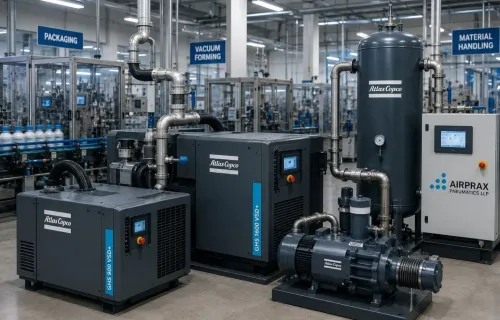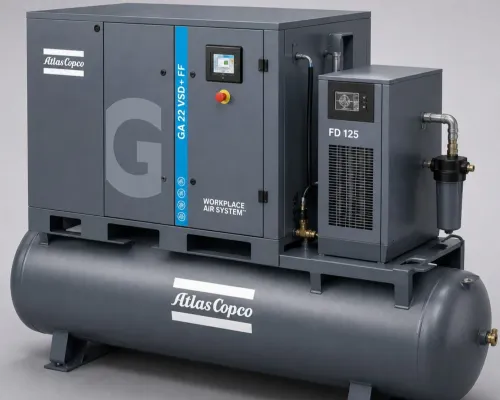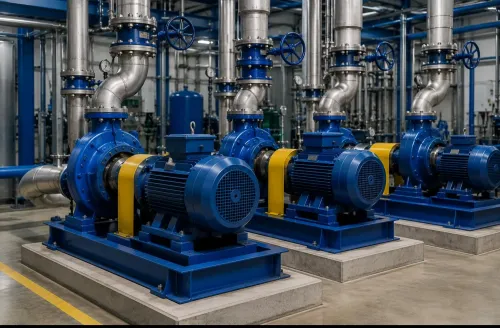

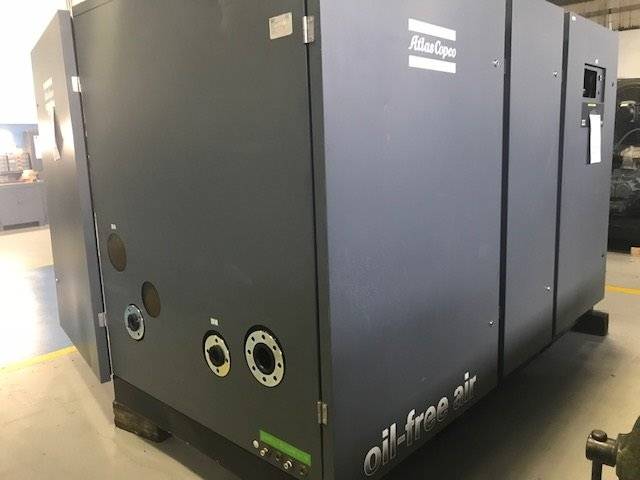
An air compressor is a pneumatic device that converts power (using an electric motor, diesel or gasoline engine, etc.) into potential energy stored in pressurized air (i.e., compressed air). By one of several methods, an air compressor forces more and more air into a storage tank, increasing the pressure. When the tank's pressure reaches its engineered upper limit, the air compressor shuts off. The compressed air, then, is held in the tank until called into use. The energy contained in the compressed air can be used for a variety of applications, utilizing the kinetic energy of the air as it is released and the tank depressurizes. When tank pressure reaches its lower limit, the air compressor turns on again and re-pressurizes the tank. Probably the most common use of air compressors in everyday life, refrigerators, freezers and air conditioners all use air compressors to chill the air. Air compressors are included in vehicle engines for heating and cooling, as well as in air brakes for larger trucks and trains. The compressor is responsible for moving the refrigerant between the evaporator and condenser coils, ensuring that the refrigerant changes to gas or liquid as needed. You can think of the compressor as the heart of the air conditioning system and the refrigerant as the blood. Air compressors work by forcing air into a container and pressurizing it. Then, the air is forced through an opening in the tank, where pressure builds up. Think of it like an open balloon: the compressed air can be used as energy as it's released. A compressor is a mechanical device that increases the pressure of a gas by reducing its volume. An air compressor is a specific type of gas compressor. Compressors are similar to pumps: both increase the pressure on a fluid and both can transport the fluid through a pipe.