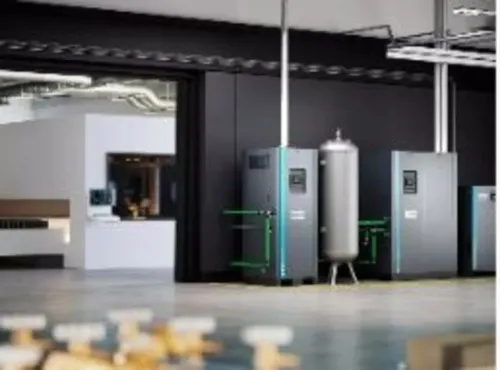

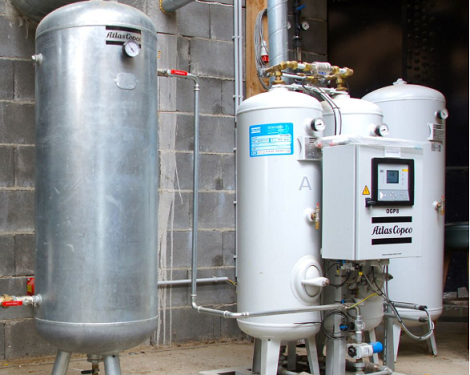
Atlas Copco oxygen generators use pressure swing adsorption (PSA) technology. The generator consists of two separate pressure vessels filled with zeolite molecular sieve material that separates the oxygen from the incoming air. Oxyair Oxygen generation plant's use two vessels filled with Zeolite Molecular sieve as absorbers. As Compressed Air passes up through one of the absorbers, the molecular sieve selectively adsorbs the Nitrogen. This then allows the remaining Oxygen to pass on up through the absorber and exit as a product gas. Oxygen plants are industrial systems designed to generate oxygen. They typically use air as a feedstock and separate it from other components of air using pressure swing absorption or membrane separation techniques. Oxygen generators work similarly to nitrogen generators — they isolate oxygen molecules and separate them from the rest of the air, creating a pure form of oxygen that can be used in industrial applications. Oxygen generators work similarly to nitrogen generators — they isolate oxygen molecules and separate them from the rest of the air, creating a pure form of oxygen that can be used in industrial applications. The air we breathe is about 21% oxygen. Oxygen for industrial use is generated by separating oxygen molecules from the other molecules within a clean, dry compressed air stream. Pressure Swing Adsorption (PSA) is a simple, reliable and cost-effective technology that enables continuous, high-capacity oxygen flow at the desired level of purity. Adsorption happens when atoms, ions or molecules from a substance (compressed air in this case) adhere to a surface of an adsorbent. PSA technology isolates oxygen molecules from other molecules (nitrogen, CO2, water vapor and trace gases) to leave high purity oxygen at the outlet of the generator. The process takes place in two separate pressure vessels (tower A and tower B), each filled with a carbon molecular sieve, that switch between a separation process and a regeneration process.