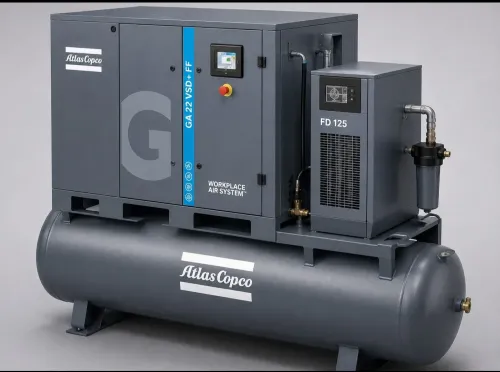

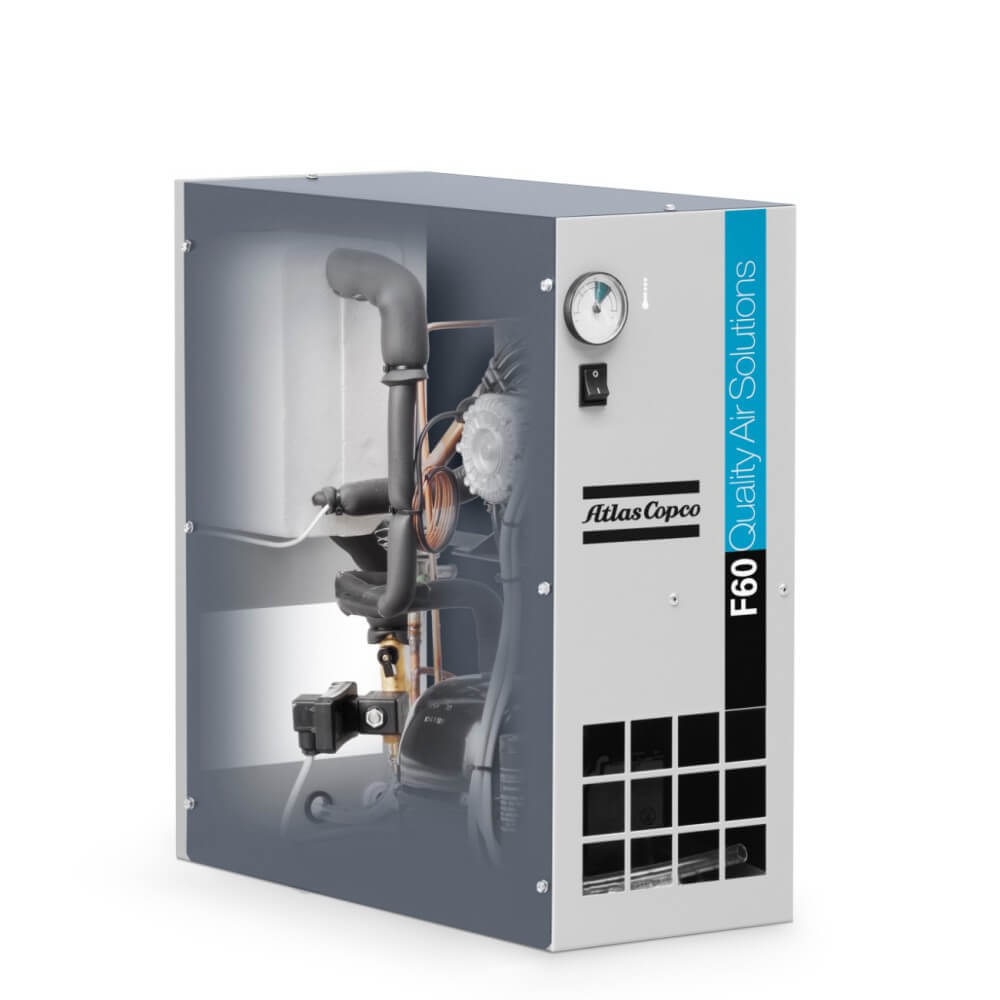
Desiccant air dryers remove water vapor from compressed air by running it through beds of desiccant media that act as sponges to absorb the moisture. These systems simultaneously dry compressed air and regenerate saturated desiccants to provide an uninterrupted flow of dry compressed air. The use of a desiccant air drying system prevents the rapid wear and breakdown of moisture-sensitive components in most industries. Wet air passes directly through the desiccant medium which adsorbs the moisture. The desiccant medium has a finite capacity for adsorbing moisture before it must be dried out, or regenerated. To do this, the tower containing saturated desiccant medium is depressurized and the accumulated water is driven off. In a desiccant dryer, adsorbing the water vapor onto the large, dry surface area of a highly porous material called desiccant dries the compressed air. This adsorption occurs as water vapor in the compressed air moves into the pores of the dry desiccant and is attracted to the surface of the pores. The general working principle of desiccant air dryers is simple: moist air flows over hygroscopic material (typical materials used are silica gel, molecular sieves, activated alumina) and is thereby dried. The exchange of water vapor from the moist compressed air into the hygroscopic material or "desiccant", causes the desiccant to gradually be saturated with adsorbed water. Therefore, the desiccant needs to be regenerated regularly to regain its drying capacity, and adsorption air dryers are typically built with two drying vessels for that purpose: The first vessel will dry the incoming compressed air while the second one is being regenerated (Similar to the workings of a nitrogen generator). Each vessel ("tower") switches tasks when the other tower is completely regenerated. Typical PDP that can be achieved is -40°C, which makes these dryers suitable for providing very dry air for more critical applications. There are 4 different ways to regenerate the desiccant, and the method used determines the type of adsorption dryer. More energy-efficient types are usually more complex and, consequently, more expensive. AD BD CD series dryers feature twin tower desiccant beds that produce dry compressed air through absorption. These systems are energy-efficient and easy to use. The series offers various model sizes with capacities of 360 to 1, 600 liters per second (l/s) and dew points as low as -40°C/-40°F to meet the needs of any application. #Aircompressor #compressor #Atlascopco #AtlascopcoCompressor #OilFreeAirCompressor #IndustrialAirCompressor #PistontypeAirCompressor #ScrewtypeAirCompressor #Peenya #Airdryer #dryer #AtlascopcoAirDryer #RefrigerantAirDryer #DesiccantAirDryer #Oxygen #OxygenGenerator #Industrialoxygenplant #Medicaloxygenplan #BestOxygenGenerator #Hosur #Nitrogen #NitrogenGenerator #NitrogenGeneratorplant #BestNitrogenGenerator #Bangalore #Vacuumpump #AtlscopcoVaccumpumps #AirFilters